Affiliate Disclaimer: This post contains affiliate links, and as an Amazon Associate we earn from qualifying purchases. If you buy through our links, we may earn a small commission at no extra cost to you. We only recommend products we genuinely believe you will enjoy.
📘 Recommended for beginners: Complete Starter Guide to Whittling
With over 300,000 copies sold, this classic has introduced more people to whittling than any other guide. Inside are 24 easy, confidence-building weekend projects, the four essential knife cuts, safe carving habits, blade sharpening, and ready-to-carve patterns with clear step-by-step photos. All you need is a pocketknife, a twig, and this book, with no prior experience required.
Wood carving is one of the most rewarding ways to work with wood. You do not need a big shop, a bench full of power tools, or years of experience. A single knife, a block of soft wood, and a quiet afternoon are enough to get started. That simplicity is a big part of why so many people fall for it.
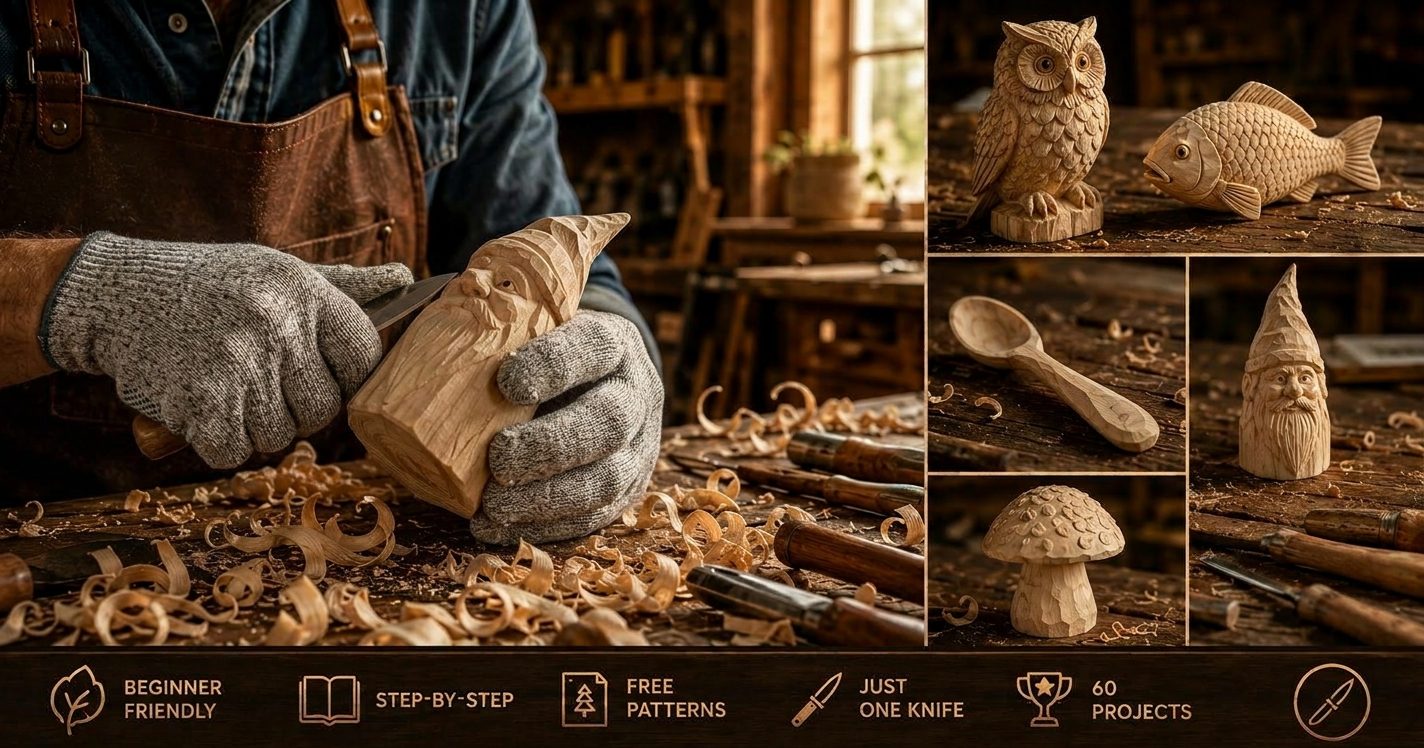
The hardest part for most beginners is not the carving itself. It is deciding what to carve. Staring at a blank block of basswood can feel more intimidating than making the first cut. This guide fixes that. Below you will find sixty beginner-friendly wood carving projects, grouped by type, along with the small kit you need to get started and where to find free patterns to trace.
What you need to start carving
You can begin with very little. Here is the short list that covers almost every project in this guide.
- Basswood. This is the standard beginner wood, and for good reason. It is soft, has a fine even grain, and carves cleanly with hand tools. Butternut and white pine are reasonable alternatives, though pine grain can be tricky to control.
- A carving or whittling knife. One good fixed-blade knife with a comfortable handle handles the majority of whittling projects. A smaller detail knife helps with tiny features later on.
- A cut-resistant glove. Wear it on the hand holding the wood. Carving knives are sharp and slips happen. This one habit prevents most beginner injuries.
- A strop and polishing compound. A sharp knife is safer than a dull one because it needs less force. Stropping keeps your edge keen between sharpenings.
- Optional gouges and a hook knife. A shallow gouge helps with relief work, and a hook knife hollows out spoons and small bowls.
That is genuinely all you need for the projects below. As you grow you might add a set of palm gouges or a rotary tool, but none of that is required to begin.
Simple first projects to learn the basics
These projects teach you the three cuts that everything else builds on: the push cut, the pull cut, and the stop cut. Start here even if you are tempted to skip ahead.
- A sharpened point, purely to practice control
- A wooden wedge or door stop
- A simple butter spreader
- A letter opener
- A flat fish silhouette
- A leaf
- A feather, which teaches thin controlled cuts
- A small paddle or canoe shape
- A tent-shaped gnome body with no face yet
- A basic mushroom
None of these need a pattern. They are about getting comfortable removing wood safely and predictably before you worry about detail.
Classic whittling projects
These are the timeless projects that carvers have passed down for generations. They look impressive but rely on simple, repeatable techniques.
- A ball inside a cage, carved from a single block
- A wooden chain from one piece of wood
- A twisted or spiral rod
- A peg or hook
- A whistle that actually works
- A spinning top
- A comb
- A small crochet hook
- A pointing hand
- A linked keychain
Animals and creatures
Animals are the most popular carving subject, and small simplified versions are very beginner friendly. Basswood blocks around two to three inches are ideal for these.
- A simple fish, one of the easiest and most satisfying carves
- A duck or mallard
- A songbird such as a wren or bluebird
- An owl, which forgives imperfect detail
- A rabbit
- A fox
- A bear
- A cat curled up
- A turtle
- A frog
- A mouse
- A penguin
- A hedgehog
- A snail
- A whale or dolphin
If you want a full walkthrough for one of these, our guide on how to carve a wooden fish covers the entire process from block to finish, and our wooden owl carving guide is a great next step once you are comfortable.
Useful items for the home
Carving something you will actually use makes the hobby feel productive, and these projects double as easy gifts.
- A cooking spoon, where a hook knife helps with the bowl
- A spatula
- A small scoop for coffee or salt
- A spurtle for stirring
- A butter spreader with a decorative handle
- A bottle opener handle
- A wall key holder
- A small bowl or catch-all dish
- A set of napkin rings
- A coaster with a carved border
Decorative and seasonal carves
These add character to a shelf and make quick handmade gifts, especially around the holidays.
- A wood spirit face carved into a branch
- A gnome with a long hat and beard
- A Santa figure or Santa ornament
- A snowman
- A small Christmas tree
- A star
- A heart
- A mushroom cluster
- An acorn
- A pumpkin for fall
- A ghost, which is about as simple as carving gets
- A cross or pendant
- A small totem
- A flower such as a rose or sunflower
- A simple relief scene on a flat panel, such as a mountain range
That is sixty projects, and every one of them is achievable with a knife and a block of basswood. The trick is to work up in small steps rather than jumping straight to the most detailed carve on the list.
Where to find free carving patterns
Patterns take the guesswork out of proportions. A good pattern gives you a front and side profile so you always know where to remove wood. You can find free beginner patterns in a few reliable places:
- Woodcarving communities and forums often share printable templates that members have drawn.
- Carving magazines publish free project patterns on their websites.
- You can trace simple silhouettes from your own sketches. For beginners, simpler shapes almost always carve better.
To use a pattern, print it at the size of your wood block, cut out the profile, trace it onto the wood with a pencil, and carve to the line. Keep the front and side profiles pinned nearby as a reference while you work, since it is easy to lose track of proportions once the shavings start piling up.
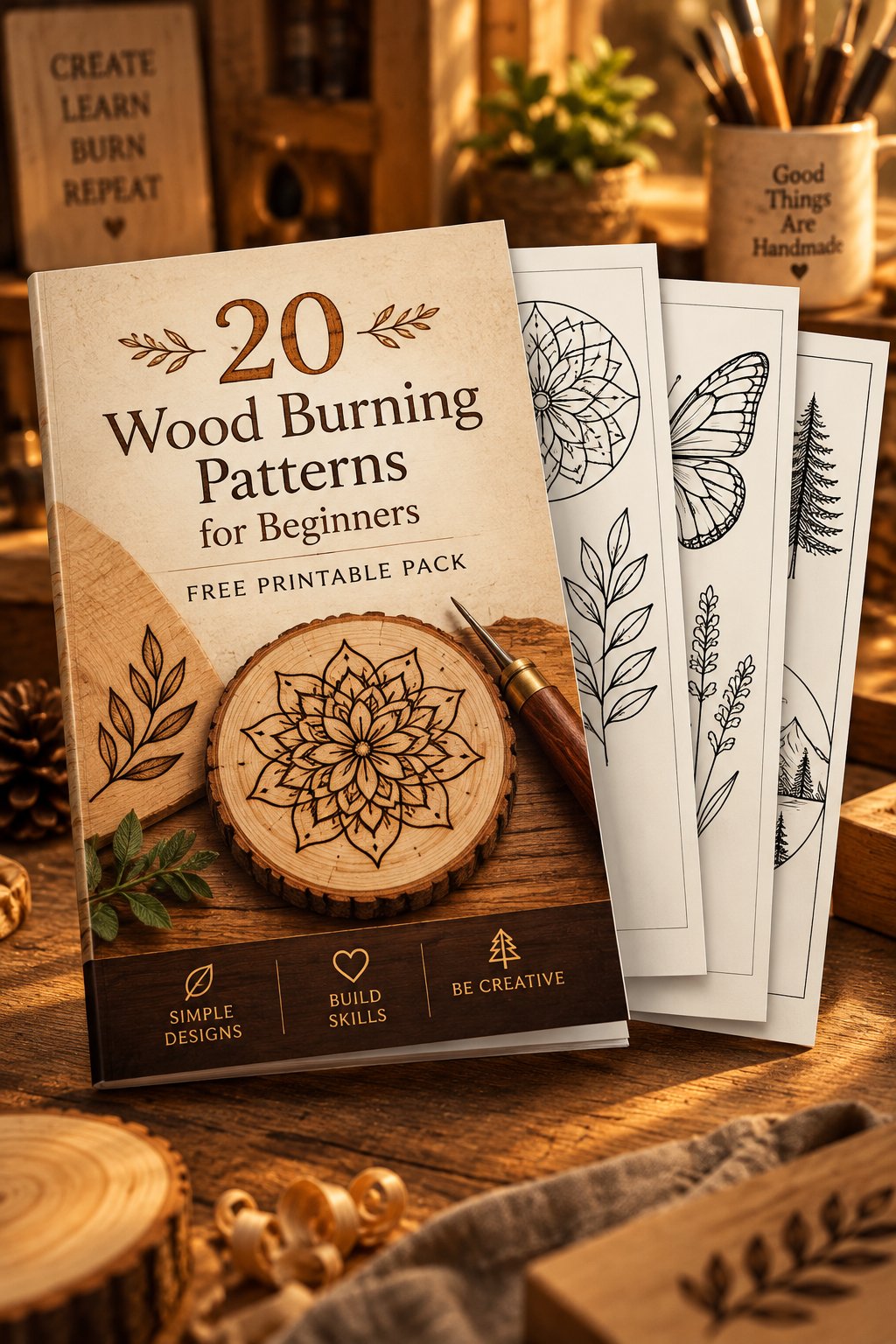
If you also fancy wood burning, which uses patterns in much the same way, we have a free pack of twenty printable burning patterns and a larger set of five hundred sorted from easiest to hardest. Several carvers use burning to add detail and shading to a finished carve, so the two skills pair well.
Staying safe while you carve
Carving is a calm hobby, but the tools are sharp and deserve respect. A few rules keep it that way. Always carve away from your body and away from the hand holding the wood, and think through where the blade will go if it slips before you push. Wear a cut-resistant glove and, if you like, a thumb guard on your carving hand. Keep your knife sharp, because a dull blade forces you to push harder, and that is when control slips. Take your time. Carving is not a race, and the best results come from slow, deliberate cuts rather than heavy ones.
A few tips that make a real difference
These small habits separate a frustrating first month from a smooth one.
- Take thin shavings. Removing a little at a time is safer and gives you far more control than trying to hog off big chunks.
- Work with the grain. If the wood tears or fights back, turn the piece and cut from the other direction.
- Rough out first, detail last. Establish the overall shape before you touch any fine features. Beginners often add detail too early and lose it as they keep removing wood.
- Finish simply. A coat of mineral oil, boiled linseed oil, or a wax finish protects the wood and brings out the grain. For anything that will touch food, choose a food-safe finish.
Frequently asked questions
What is the best wood for a complete beginner? Basswood. It is soft, affordable, and carves predictably, which lets you focus on technique rather than fighting the wood.
How long does a beginner project take? Many of the simple projects on this list take under an hour once you are comfortable with the basic cuts. Your first few will take longer, and that is completely normal.
Do I need more than one knife? No. One good general carving knife will carry you through the majority of these projects. Add a detail knife and a hook knife only when a project actually calls for them.
Getting the most from your carving knife
Since a single knife does most of the work in whittling, it pays to keep it in good shape. A sharp knife is the difference between smooth, controlled cuts and a frustrating fight with the wood, and it is genuinely safer, because you use less force and the blade goes where you intend.
Two habits keep an edge keen. The first is stropping, which is running the blade over a piece of leather charged with polishing compound. A quick strop before and during a carving session realigns and polishes the edge, and for a while it is all the maintenance a knife needs. The second is sharpening on a stone, which you do less often, when stropping no longer brings the edge back. If you are new to sharpening, start by learning to strop well, since it covers most of your day-to-day needs and is hard to get wrong.
Beyond sharpening, keep your knife dry to prevent rust, and store it where the edge is protected. A blade that stays sharp and clean will serve you for many years and dozens of projects.
How to keep improving as a carver
Progress in carving comes from finishing projects, not from buying more tools. Each completed carve teaches you something the last one did not, and the fastest way to improve is simply to carve often, even if the sessions are short. A twenty-minute carve after dinner adds up quickly over a few weeks.
A good way to grow is to repeat a project two or three times before moving on. Your second fish or owl will show you exactly what you learned from the first, and that comparison is one of the most encouraging parts of the hobby. When a project feels easy, reach for the next difficulty on the list rather than staying comfortable. Over a few months of steady practice, the beginner carves at the top of this guide will feel simple, and the detailed pieces at the bottom will feel within reach.
Ready to build beyond carving?
Carving is a fantastic entry point into working with wood. Once you catch the bug, a lot of carvers want to branch into full builds like shelves, boxes, and furniture. If that sounds like you, having a large library of complete plans with cut lists and measurements saves a lot of trial and error.
Explore 16,000+ Woodworking Plans →
Pick one simple project from the list, grab a block of basswood, and make your first cut this week. The only way to get good at carving is to carve, and every skilled carver started exactly where you are right now.