Affiliate Disclaimer: This post contains affiliate links. If you buy through them, we may earn a small commission at no extra cost to you. We only recommend products we genuinely believe can help you.
Turning woodworking into income is one of the most common goals hobbyists have, and it is a realistic one. The projects that actually sell tend to share a few traits. They are quick to make, they use inexpensive materials, and they solve a small problem or add a bit of charm to a home. You do not need a workshop full of machinery or years of experience. Some of the best selling wood products are simple enough to build in an evening.
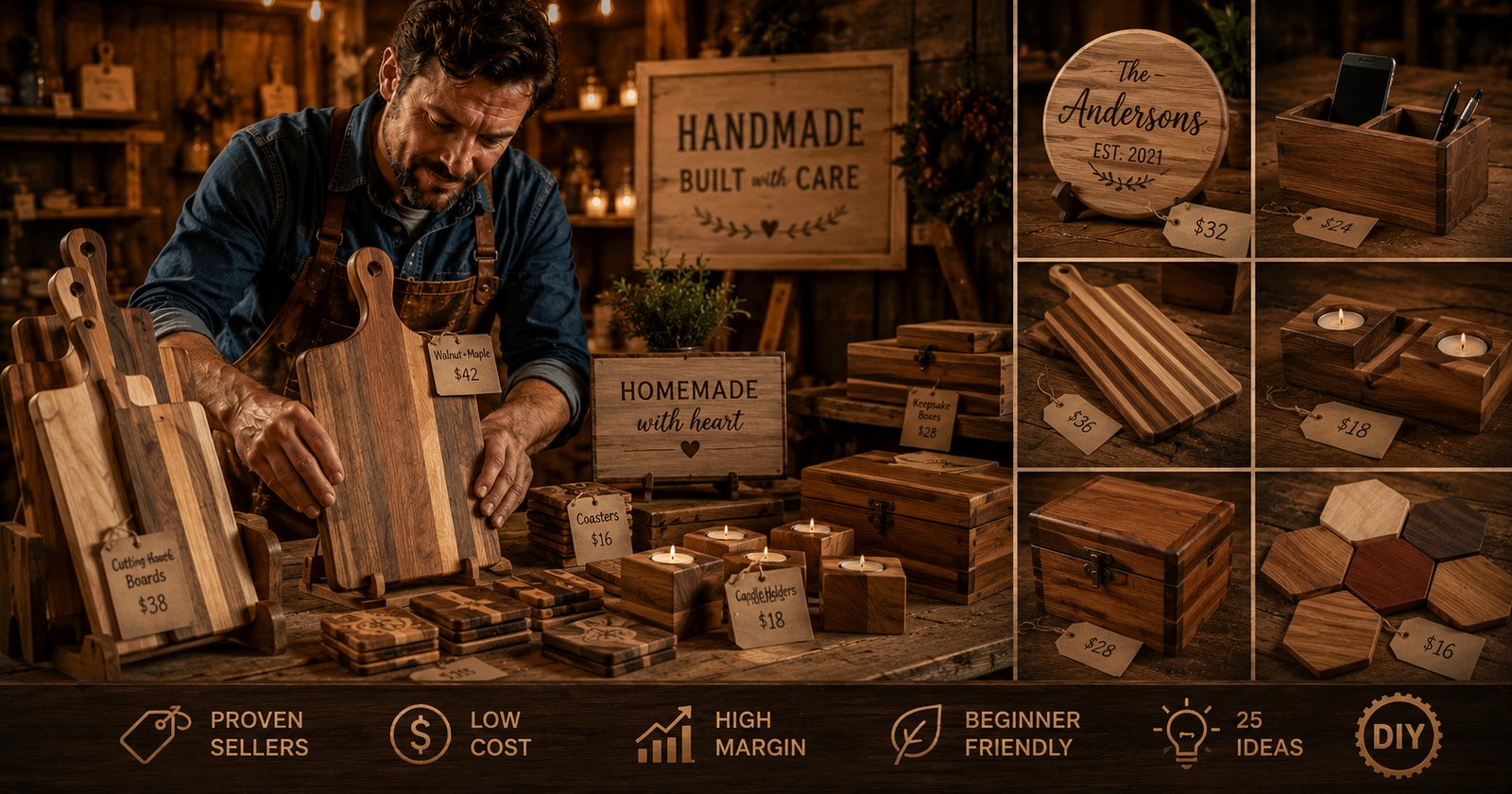
Below are twenty-five woodworking projects that sell well, grouped by category, with honest notes on materials cost, typical selling range, and effort. Prices vary a lot by region, wood choice, and finish, so treat the numbers as rough guidance rather than promises. At the end you will find practical advice on pricing and where to sell.
How to read the margins
For each project, the real margin depends on three things: the cost of your materials, the time it takes, and what your local or online market will pay. A project can have a great margin on paper and still be a poor choice if it takes many hours to make. The best sellers hit a sweet spot of low material cost, low time, and steady demand. Keep that balance in mind as you read.
Kitchen and dining products
Kitchen items are among the most reliable sellers because they combine usefulness with the appeal of natural wood. Buyers happily pay a premium for handmade over mass produced here.
- Cutting boards. The classic seller. Simple edge-grain boards use a few dollars of hardwood and sell in a comfortable mid range. End-grain and patterned boards take more work but command higher prices. Margins are strong, and demand is year round.
- Charcuterie and serving boards. Similar to cutting boards but often larger and more decorative, with handles or live edges. They sell well and photograph beautifully, which helps online.
- Coasters. Very low material cost, often made from offcuts. Sold in sets, they offer good margins for little wood, though each set takes some finishing time.
- Wooden spoons and spurtles. Carved or shaped kitchen utensils have a high perceived value relative to their small material cost.
- Lazy Susans. A round board on a bearing. Inexpensive to make and popular for dining tables, with a healthy markup.
Home decor and organization
Decor sells on looks and personality, so these projects reward a good finish and a clear style.
- Floating shelves. Always in demand. Material cost is modest, and rustic or modern styles both sell. Larger sets bring in more per sale.
- Wall art and signs. Simple wooden signs with a quote, a family name, or seasonal wording sell steadily, especially personalized. Very low material cost and high perceived value.
- Key and mail organizers. A small wall piece with hooks and a slot. Cheap to make, useful, and a popular gift.
- Candle holders. Turned or block-style holders use little wood and sell well in sets, particularly around the holidays.
- Picture frames. Rustic and reclaimed-wood frames have a strong following. Low cost, quick to make once you have a process.
- Plant stands. Small stands and shelves for houseplants ride a large ongoing trend. Simple builds with good margins.
Small useful items and gifts
These are the quick wins. Small, cheap to make, and easy to sell in volume at markets or online.
- Phone and tablet stands. A small, clever build that sells fast at a good markup for the tiny amount of wood used.
- Bottle openers. A wooden handle with a metal opener fitted in. Inexpensive parts and quick to produce.
- Bookends. Simple, heavy, and useful. Decorative versions sell for more.
- Desk organizers. Pen holders and small caddies made from offcuts. Great margins for scrap wood.
- Jewelry and keepsake boxes. A step up in effort, but small boxes carry a high perceived value and make popular gifts.
- Trivets. Simple slatted or patterned wood trivets protect tables and sell in sets.
Outdoor and garden
Outdoor items sell strongly in spring and summer and often carry higher price tags because they are larger.
- Planter boxes. Cedar planters are a reliable seller through the warm months. Material cost is moderate, and the selling price scales with size.
- Birdhouses and bird feeders. Charming, quick, and cheap to make. Perennial favorites at markets and easy to sell as gifts.
- Garden trellises. Simple frames for climbing plants. Low cost, and larger ones sell for a solid amount.
- Adirondack chairs. A bigger build with a much higher price tag. More time and material, but strong demand and a satisfying margin per chair.
Seasonal and trending items
Seasonal products can be your best earners if you make them ahead of demand, since buyers shop early.
- Christmas ornaments and decor. Tiny material cost, high volume potential, and buyers who shop from fall onward. A top seasonal earner.
- Wooden Christmas trees and villages. Decorative seasonal pieces with strong appeal and good markup.
- Fall and Halloween decor. Pumpkins, ghosts, and rustic signs sell quickly in their short window. Wood burning is a quick way to make them stand out, and our 500 Halloween wood burning patterns come with a commercial-use licence, so you can sell the pieces you burn.
- Personalized gifts. Engraved or custom pieces in any category above. Personalization is the single easiest way to raise your price, because it turns a generic item into a one-of-a-kind gift. Wood burning is the cheapest way to add it: a pen, a pattern, and an hour. Our 500 pattern set includes empty frames and monogram surrounds for exactly this, and the licence covers selling the finished pieces.
How to price your work
Pricing is where many makers undercharge. A simple, fair approach is to add up your material cost, add a reasonable hourly rate for your time, and then set a price that the market will accept. If your calculated price is far above what similar items sell for, look for ways to make the item faster or in batches rather than simply cutting your rate to nothing.
A few principles help. Sell in sets where it makes sense, since a set of four coasters is easier to price well than a single one. Offer personalization as a paid upgrade. Batch your work, because making six cutting boards at once takes far less than six times the effort of making one. And do not compete on price with mass-produced goods. Your advantage is that yours is handmade, natural, and customizable, so lean into that.
Where to sell
You have several good options, and most successful makers use more than one.
- Craft fairs and markets. Great for quick, lower-priced items and for getting immediate feedback on what people pick up. Bring plenty of small impulse items.
- Online marketplaces. Good reach for personalized and decorative pieces. Strong photos matter enormously here.
- Local social media and community groups. Low cost and effective for reaching nearby buyers, especially for larger items like furniture and planters that are hard to ship.
- Word of mouth and repeat orders. Once people know you make quality items, custom and gift orders tend to follow, particularly around the holidays.
Keep your material costs low
Your margin starts with what you pay for wood, and there are several ways to keep that number down. Offcuts and scrap are your friend for small items like coasters, key holders, and ornaments, and they often cost nothing. Buying common lumber in larger quantities usually lowers the price per board foot, so once you settle on a few products, buy the wood for them in bulk. Pallets and reclaimed wood can be a source of free or cheap material for rustic pieces, though you should check for nails and treated wood before using them. The goal is simple: the less you spend on materials, the more of each sale you keep.
Photograph your work well
For anything you sell online, the photo does most of the selling. A cutting board that looks ordinary in a dim kitchen photo will sit unsold, while the same board shot in good light on a clean background moves quickly. You do not need a fancy camera. A modern phone, natural light near a window, and a simple uncluttered background will do. Show the piece from a few angles, include a shot that gives a sense of scale, and if it is a kitchen item, a lifestyle photo of it in use helps buyers picture owning it. Good photos cost you nothing but a little time and they raise both your sales and the price people will pay.
Hobby or business, a quick note
When you start selling regularly, it is worth thinking about whether you are running a hobby or a small business. The rules for taxes, sales permits, and registering a business vary by country and region, so check what applies where you live before your side income grows. Keeping simple records of your material costs and your sales from the start makes this much easier later, and it also shows you which products are actually earning their keep. None of this needs to be complicated when you are starting out, but a little bookkeeping saves headaches down the road.
The one thing that speeds everything up
The makers who earn the most are usually not the most skilled. They are the most efficient. They pick a handful of proven products, build a repeatable process, and make them in batches. The fastest way to get there is to work from complete plans with exact measurements and cut lists, so you are not redesigning every piece or guessing at dimensions. That saves both wood and hours, and both go straight to your bottom line.
Get Instant Access to 16,000+ Plans →
Test before you commit to a product line
Before you make fifty of anything, make a handful and put them in front of real buyers. A craft fair table or a few online listings will tell you quickly what people pick up, what they walk past, and what price they are willing to pay. This small test saves you from investing hours and materials into a product that does not move. Track which items sell fastest and which earn the best margin, and let those two numbers guide where you focus. The goal is to find your two or three winners, then make those efficiently in batches rather than spreading yourself across a dozen slow sellers.
Frequently asked questions
Do I need expensive tools to make products that sell? No. Many of the best sellers, such as coasters, cutting boards, signs, and small organizers, can be made with basic tools. Better tools mainly help you work faster, not sell for more.
What sells best for a complete beginner? Start with low-cost, quick items that people buy on impulse, like coasters, key holders, ornaments, and simple cutting boards. They are forgiving to make and easy to sell in volume.
How do I stand out from other sellers? Offer personalization, use strong photos, and lean into the handmade, natural quality that mass-produced goods cannot match. A custom name or date turns an ordinary item into a gift, and gifts sell.
Getting started
Pick two or three projects from the categories above that match your tools and your interests. Build a few of each, photograph them well, and test them at a local market or online. Pay attention to what sells fastest and what earns the best margin, then double down on those. A small, focused lineup of proven sellers will always beat a scattered pile of one-off pieces. Start simple, keep your costs low, and let your best sellers guide where you grow.