Affiliate Disclaimer: This post contains affiliate links. If you buy through our links, we may earn a commission at no extra cost to you. We only recommend products we genuinely believe can help you.
A backyard chicken coop is one of the most satisfying projects a woodworker can build. It is big enough to feel like a real accomplishment, it uses skills every DIYer wants to practice, framing, roofing, siding, and fitting doors, and when it is done it keeps earning its keep for years. The fresh eggs are a lovely bonus, but for anyone who enjoys working with wood, the coop itself is the reward: a solid, good-looking structure you built with your own hands. This guide covers why a coop is a great woodworking project, what a good coop needs, the basic build, and where to get plans that make it straightforward.
Why build your own coop?
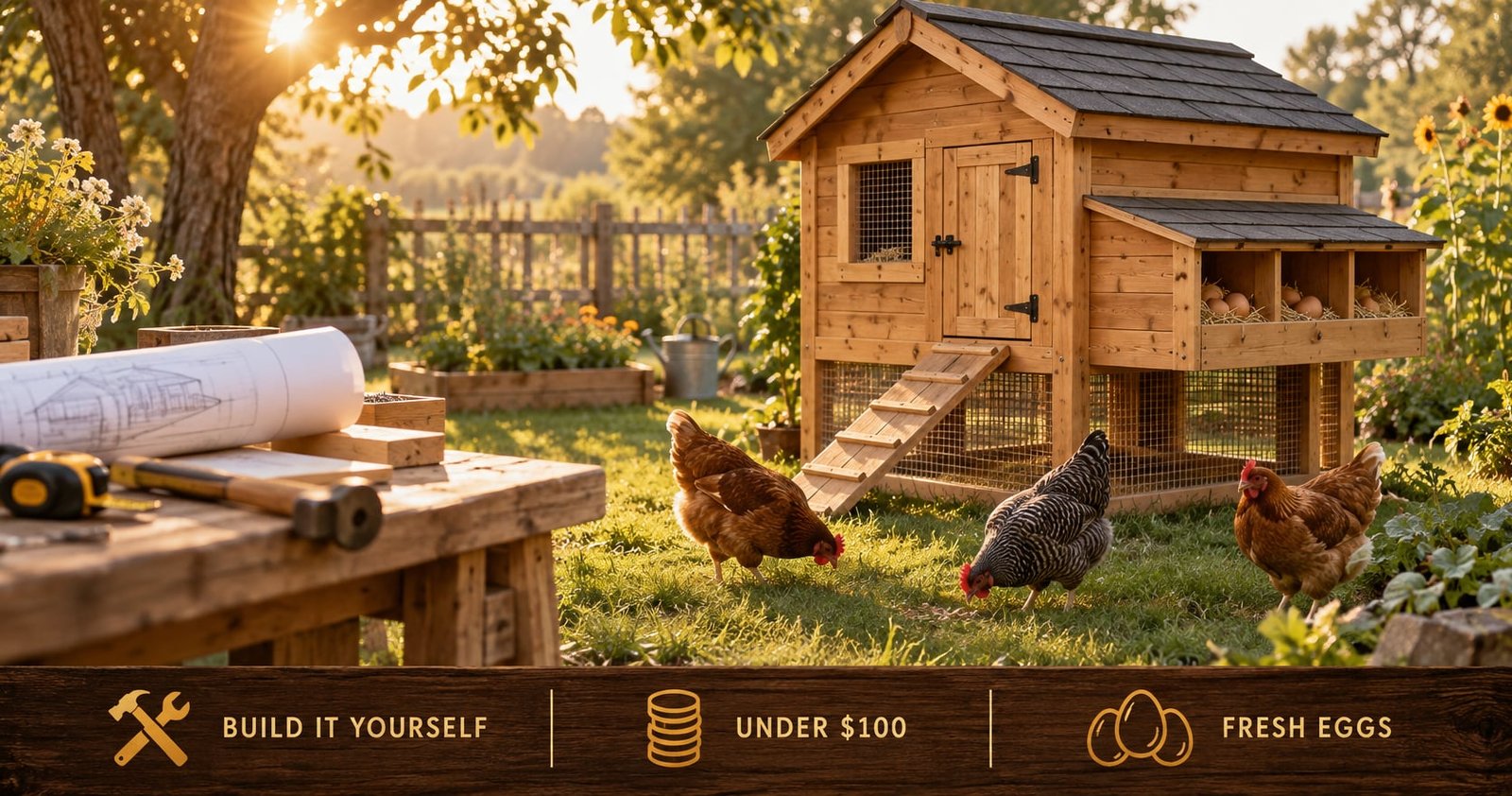
The first reason is cost. Prebuilt coops are surprisingly expensive, and the flat-pack ones from the garden center are often flimsy and overpriced for what you get. With a good set of plans and some basic materials, you can build a sturdier, better-looking coop for a fraction of the price, in some cases for around $100 in materials.
The second reason is that it is a genuinely enjoyable build. A coop brings together the core skills of outdoor woodworking in one manageable project, so it is a fantastic way to sharpen up if you are still building confidence, and a fun afternoon or two if you are experienced. And because you are building it yourself, you can size it to your yard, match it to your home, and add the exact features you want.
What a good chicken coop needs
Before you pick up a saw, it helps to understand what makes a coop actually work, because a coop is not just a box. Getting these details right is what separates a coop your birds thrive in from one that causes problems. A well-designed coop includes:
- Enough space. As a rule of thumb, allow roughly 2 to 4 square feet per bird inside the coop, and 8 to 10 square feet per bird in the attached run. Crowded birds are unhappy and unhealthy, so size it for the flock you want.
- Nesting boxes. Hens need a quiet, dim place to lay. One box for every three or four hens is plenty, each around 12 inches square, with a little lip to hold bedding in.
- Roosting bars. Chickens sleep up off the ground. A roosting bar a couple of inches wide, mounted higher than the nesting boxes, gives them somewhere to perch.
- Good ventilation. Fresh air is essential for healthy birds, but you want it placed up high so it does not blow directly on them. Vents near the roofline do the job.
- Predator protection. This is the one people underestimate. Use hardware cloth rather than flimsy chicken wire, secure every opening, and use latches a clever raccoon cannot open. A buried apron of mesh around the base stops animals digging in.
- Easy access for cleaning. A coop you can reach into and clean easily is a coop you will actually keep clean. Build in a good-sized access door or a removable floor tray.
Keep these in mind as you choose a design, and you will end up with a coop that is a pleasure to own rather than a constant headache.
The basic steps of building a coop
A coop is a small building, and it follows the same logic as any outdoor structure, which is good news for a woodworker.
1. Build a raised floor. Most coops sit up off the ground on legs or a frame, which keeps the floor dry and makes it harder for predators to get underneath. A framed floor topped with exterior plywood is the base for everything.
2. Frame and clad the walls. Frame the walls, including openings for the door, the chickens’ pop door, windows, and vents, then clad them with exterior siding or plywood.
3. Build the roof. A simple sloped or gabled roof with a good overhang sheds rain and keeps the interior dry. This is classic roofing practice at a small, friendly scale.
4. Add the internal fittings. Install the nesting boxes, mount the roosting bars, and fit any internal dividers. This is the part that turns a shed into a coop.
5. Fit doors and the run. Add a human-sized access door, the small chicken pop door, and attach a run framed and covered in hardware cloth so your birds can get outside safely.
6. Weatherproof and finish. A coat of exterior paint or stain protects the wood and lets you make it look sharp. Well-finished, a coop can be a genuine feature of the yard.
Each stage is well within reach of a keen DIYer, and a clear plan turns the whole thing into a straightforward sequence of simple tasks.
What makes a good coop plan
As with any build, the plan you start from makes all the difference. A vague plan with missing measurements or no materials list will have you guessing, making extra hardware-store trips, and cutting parts twice. A good plan removes all of that. Look for:
- Clear step-by-step instructions that take you from the floor frame to the finishing touches.
- A complete materials and cutting list, so you buy exactly what you need and cut each piece to the right size.
- Detailed drawings, ideally 3D views, so you can see how each part fits before you build it.
- Beginner-friendly clarity, with illustrations rather than confusing jargon.
Where to get good coop plans
If you want a complete, detailed plan rather than piecing one together yourself, there is a popular guide built exactly for this. The Backyard Chicken Coop guide gives you 3D schematics, a full tools and materials list, and step-by-step blueprints to build a solid coop for around $100 in materials. It is designed so that even a first-time builder can follow it and end up with a sturdy, predator-safe coop that ticks all the boxes above.
Being a woodworker’s resource at heart, it also comes with access to a large library of additional DIY and woodworking project plans, so the coop can be the first of many builds rather than a one-off. It is a one-time digital purchase of around $39, delivered instantly, and it is backed by a 60-day money-back guarantee, so you can read through the plans and decide risk-free before buying any materials.
The bonus: fresh eggs from your own backyard
Of course, the practical payoff of all this woodworking is a steady supply of fresh eggs from your own yard. A few hens in a well-built coop will keep a household in eggs, and there is a real satisfaction in collecting them from a coop you made yourself. With grocery prices what they are, a backyard flock can also quietly pay for the cost of the build over time. For a woodworker, it is the rare project that keeps giving back long after the last board is cut.
A few tips for a smooth build
Read the whole plan before you buy anything, so you understand the full project. Make sure your floor frame is level and square, since everything else sits on it. Spend a little extra on proper hardware cloth and solid latches, because predator protection is the one area not to cut corners. And give the finished coop a good coat of exterior paint or stain to protect your work. If you are still building out your toolkit, our guide to the essential tools for beginners covers what you will need, and if you catch the building bug, our beginner’s guide on how to build a shed is a natural next project.
Frequently asked questions
How much does it cost to build a chicken coop? With good plans and basic materials, you can build a solid small coop for around $100, far less than most prebuilt ones. The exact cost depends on size and the materials you choose.
Is building a chicken coop hard for a beginner? No. A coop is a small structure made of simple parts, and with a detailed, step-by-step plan, each stage is manageable. It is a great project for building your woodworking confidence.
How big should a chicken coop be? Allow roughly 2 to 4 square feet per bird inside the coop and 8 to 10 square feet per bird in the run. Build for the size of flock you want to keep.
How long does it take to build a coop? A simple coop is realistically a weekend project for most DIYers, a little longer for a larger or more detailed design.
A backyard chicken coop is the kind of project that rewards you twice: once in the building of it, and again every time you collect eggs from it. Choose a design that fits your yard, start with a plan that leaves nothing to guesswork, and you will have a sturdy, great-looking coop to be proud of.