Affiliate Disclaimer: This post contains affiliate links, and if you buy through them we may earn a small commission at no extra cost to you. We only recommend products and resources we genuinely believe you will enjoy.
Turning your woodworking into a bit of income is one of the most common goals hobbyists have, and it is a realistic one. Plenty of people sell handmade wooden items online and at local markets, earning enough to pay for their tools and materials, and sometimes a good deal more. You do not need a workshop full of machinery or years of experience to start. What you need is a product people want, honest pricing, and a place to sell it.
This guide covers how to sell your woodworking on Etsy and at craft fairs, from choosing what to make to pricing, photography, and setting up. It is a practical, honest look at getting started, without any get-rich-quick promises.
Start with what actually sells
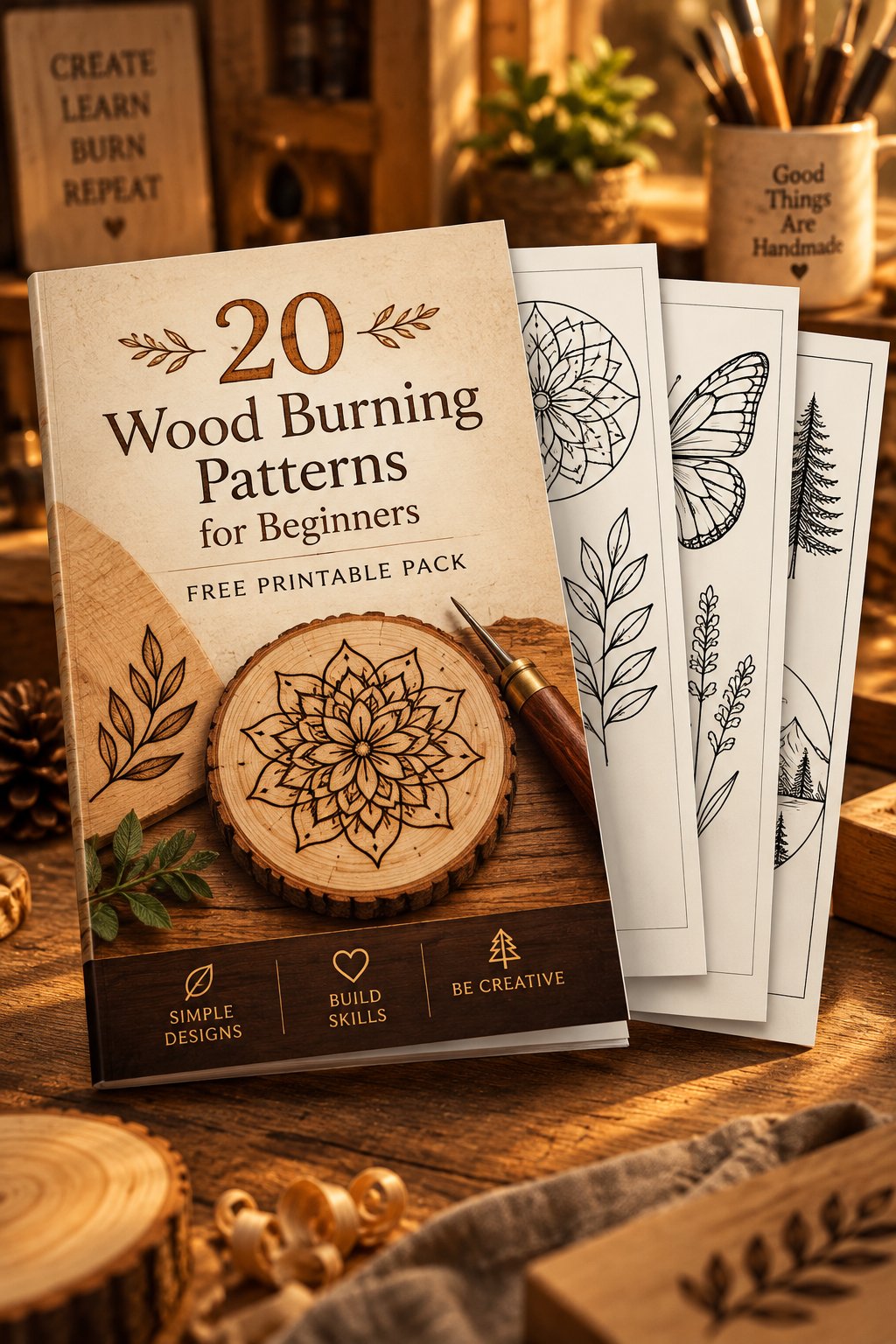
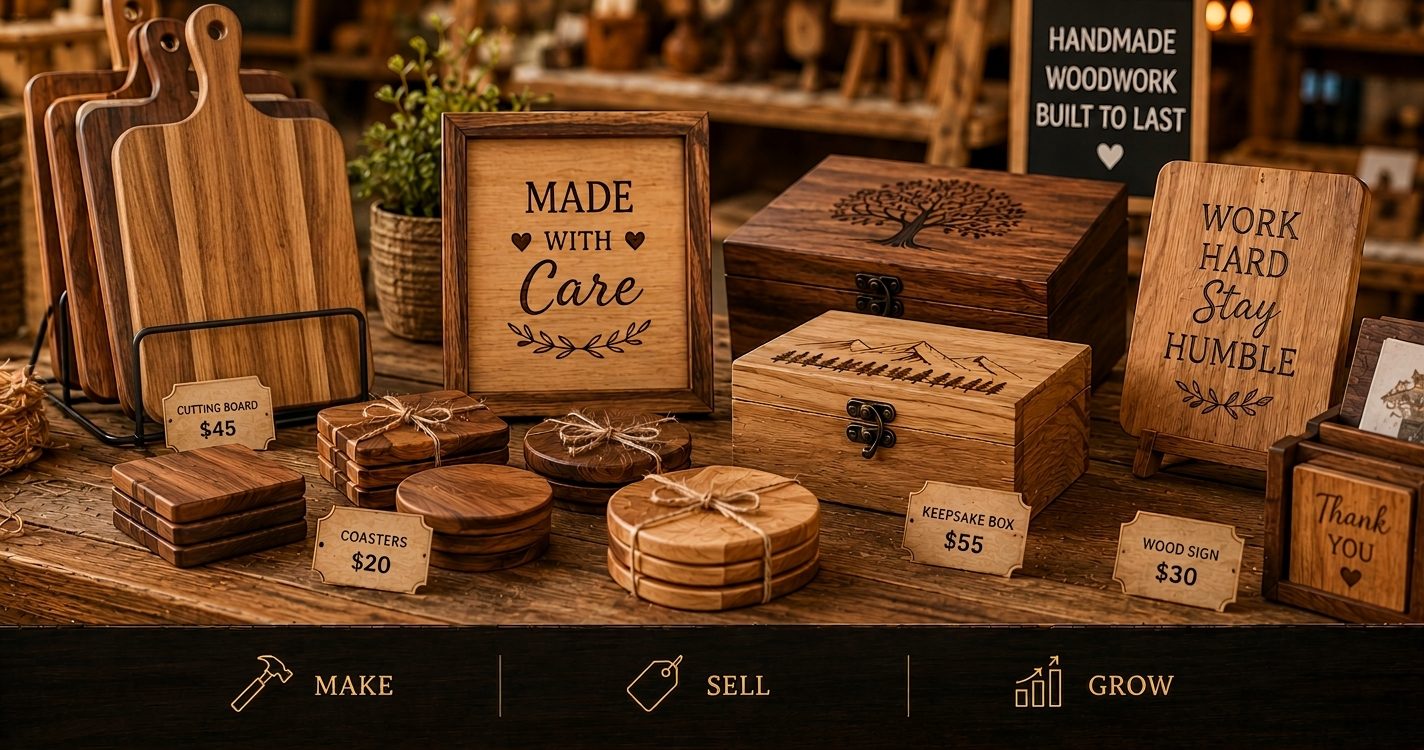
Before you make a hundred of anything, it helps to know what people buy. The best-selling wooden items tend to be useful, attractive, and quick to make, which keeps your costs low and your margins healthy. Cutting boards, coasters, candle holders, small signs, key holders, jewelry boxes, and simple home decor are perennial sellers. Personalized items, where you add a name or a date, sell especially well, because personalization turns a generic item into a one-of-a-kind gift. Wood burning is the lowest-cost way to add that, and our 500 pattern set comes with a licence that lets you sell the finished pieces freely, with no royalty and no limit on quantity.
Our roundup of woodworking projects that sell goes deeper into specific products and their margins. The key idea is to pick items that are cheap to make, quick to produce in batches, and in steady demand, rather than one big showpiece that takes forever and appeals to almost no one.
Decide what to make
Choose products that sit where three things overlap: what you enjoy and are good at making, what people actually want to buy, and what earns a reasonable margin for your time. It is tempting to make what you find most fun, but if it takes ten hours and sells for twenty dollars, it will not be worth it. Start with a small lineup of two or three proven items, get good and fast at making them, and expand from there once you see what sells.
Testing is your friend. Before committing to a big batch, make a few of an item and see how people respond, whether online or at a single market. Let real buyers tell you what works rather than guessing.
Price your work properly
Pricing is where many makers go wrong by charging too little. A fair price covers your materials, pays you a reasonable rate for your time, and still makes sense against similar items on the market. Add up what the materials cost, add a sensible hourly rate for the hours you put in, and check that the result is competitive with comparable handmade pieces.
If your calculated price feels too high, the answer is usually to make the item faster or in batches, not to slash your rate to nothing. Do not compete on price with mass-produced goods, because you will lose. Your advantage is that your work is handmade, natural, and customizable, so price it accordingly and lean into that value. Selling in sets, like a set of four coasters, and offering personalization as a paid upgrade both help you earn more per sale.
Selling on Etsy
Etsy is a natural home for handmade wooden goods, since shoppers there are specifically looking for handmade and personalized items. Setting up a shop is straightforward, but a few things make the difference between a shop that sells and one that sits quiet.
Your photos matter more than anything else, since they do the selling. Clear, bright, well-composed pictures on a clean background, plus a lifestyle shot showing the item in use, make buyers trust and want your product. Your listing titles and descriptions should use the words people actually search, like the item, the wood, and the occasion, so your products show up in searches. Think about shipping early, since wooden items can be heavy or fragile, and factor packaging and postage into your pricing. Good reviews build over time and bring in more sales, so treat every early customer well.
Selling at craft fairs and markets
Local markets and craft fairs are a great way to sell, especially for larger items that are awkward to ship, and they give you immediate feedback on what people pick up. A few things help you do well.
Your display should be tidy, attractive, and easy to browse, ideally at a height where people can see and handle your work. Bring a range of price points, including small impulse items like coasters and ornaments that people buy on a whim, alongside your bigger pieces. Clear price signs save you from repeating yourself and help hesitant buyers decide. Be ready to take card payments as well as cash, since many people no longer carry cash. And bring plenty of stock of your best sellers, because running out of your popular item is a missed opportunity.
Photography is worth the effort
For anything you sell online, and for your marketing everywhere, good photos are the single biggest factor in whether people buy. You do not need fancy equipment. A modern phone, natural light near a window, and a simple, uncluttered background will produce photos that sell. Show the piece from a few angles, include a shot that gives a sense of scale, and for useful items, a lifestyle photo of it in use helps buyers picture owning it. A little time spent on photography pays off in both sales and the price people will pay.
Build a simple brand and offer personalization
A little branding helps your work stand out and feel professional. A simple shop name, consistent photo style, and a small touch like a care card or nice packaging make your items memorable. Personalization is your secret weapon, since an engraved name, date, or custom message turns an ordinary item into a gift, and gifts sell. Offering it as a paid option raises both your appeal and your price.
Other places to sell
Etsy and craft fairs are the classic starting points, but they are not the only options, and most successful makers use more than one channel. Local social media groups and community marketplaces are excellent for reaching nearby buyers, especially for larger items that are hard to ship. Instagram and Pinterest are great for showing off your work and driving people to your shop, since woodworking photographs beautifully. Word of mouth is powerful once people know you make quality items, and custom orders tend to follow, particularly around the holidays. You can also approach local shops, cafes, and boutiques about stocking a few of your pieces. Spreading across a couple of channels smooths out the ups and downs and reaches different kinds of buyers.
Turn one sale into repeat customers
The real money in selling handmade is not the first sale, it is the customers who come back. A buyer who loves their cutting board is the most likely person to buy another as a gift, or to order a custom piece. Treat every customer well, include a small care card or a thank you note, and make it easy for them to find you again. Encouraging happy customers to leave a review, and staying in touch through a simple email list or social media, keeps you in their mind for the next occasion. Repeat and custom orders are far easier to earn than new ones, and they are where a small side income becomes a steady one.
Common mistakes to avoid
A few missteps trip up a lot of new sellers, and all of them are easy to sidestep. The biggest is underpricing, which leaves you working for almost nothing and is hard to correct later. Another is poor photos, which quietly kill online sales no matter how good the product is. Making too many different items instead of getting fast and good at a few is a common trap, as is ignoring the numbers and not knowing which products actually earn. And chasing a get-rich-quick course or scheme rarely pays off, since the real path is steady work on proven products. Avoid these, and you are already ahead of most.
Keep your material costs low
Your profit starts with what you pay for materials, so keep those costs down. Offcuts and scrap are perfect for small items like coasters and ornaments and often cost nothing. Buying common lumber and supplies in larger quantities usually lowers the price per piece, so once you settle on a few products, buy their materials in bulk. Keep an eye on your finishes, hardware, and packaging costs too, since they add up across many sales. The less you spend making each item, the more of every sale you keep.
A quick word on the business side
Once you start selling regularly, it is worth thinking about the practical side. Keep simple records of your material costs and your sales from the start, which shows you which products actually earn their keep and makes everything easier later. Rules for taxes, sales permits, and registering a small business vary by country and region, so check what applies where you live before your side income grows. None of this needs to be complicated when you are starting out, but a little bookkeeping saves headaches down the road.
If you want to turn it into a real business
Selling a few pieces is one thing, and building a genuine home business is another. If you find you love the selling side and want to grow it properly, it helps to learn the business side from someone who has already done it, rather than working out pricing, marketing, and day-to-day operations by trial and error. WoodProfits is a practical guide to starting and running a woodworking business from home, covering how to find customers, price for profit, and set the whole thing up without a big upfront investment. If your side income is starting to feel like it could become something more, it is a useful roadmap to follow.
Scale up by batching and using plans
The makers who earn the most are usually the most efficient, not the most skilled. They pick a handful of proven products and make them in batches, which saves a lot of time compared to making one at a time. Cutting all your parts at once, sanding them together, and finishing them in one session dramatically speeds up production. Working from complete plans with exact measurements makes batching far easier, since you are not re-measuring or redesigning for each piece, and it keeps your products consistent.
Frequently asked questions
What woodworking items sell best? Useful, attractive items that are quick to make tend to sell best, such as cutting boards, coasters, candle holders, small signs, and boxes. Personalized versions sell especially well, since they make ready-made gifts.
How do I price my woodworking? Add up your material costs, pay yourself a fair hourly rate for your time, and check that the result is competitive with similar handmade items. If it feels too high, make the item faster or in batches rather than cutting your rate to nothing.
Is Etsy or a craft fair better for selling? They suit different things. Etsy reaches a wide online audience and works well for items you can ship, while craft fairs are great for larger pieces and give you instant feedback. Many makers do both.
Do I need a business license to sell? Rules for permits, licenses, and taxes vary by country and region, so check what applies where you live before your income grows. When you are just starting out, keeping simple records of costs and sales is the main thing.
Start small and let it grow
Selling your woodworking is genuinely achievable, and the honest path to it is simple. Pick a few proven items, price them fairly, take great photos, and start selling on Etsy or at a local market. Test what works, double down on your best sellers, keep your costs low, and make them efficiently in batches. It will not make you rich overnight, but it can absolutely turn a hobby you love into a steady stream of income, one handmade piece at a time.